For much of modern history, progress has been measured by output. Faster production, higher efficiency, and increased scale became the primary signals of success. Economic systems, education models, and workplace cultures were built around the idea that value could be calculated through visible results. In this framework, productivity was not just an economic goal; it became a moral one. To be useful was to be productive, and to be productive was to justify one’s place in society.
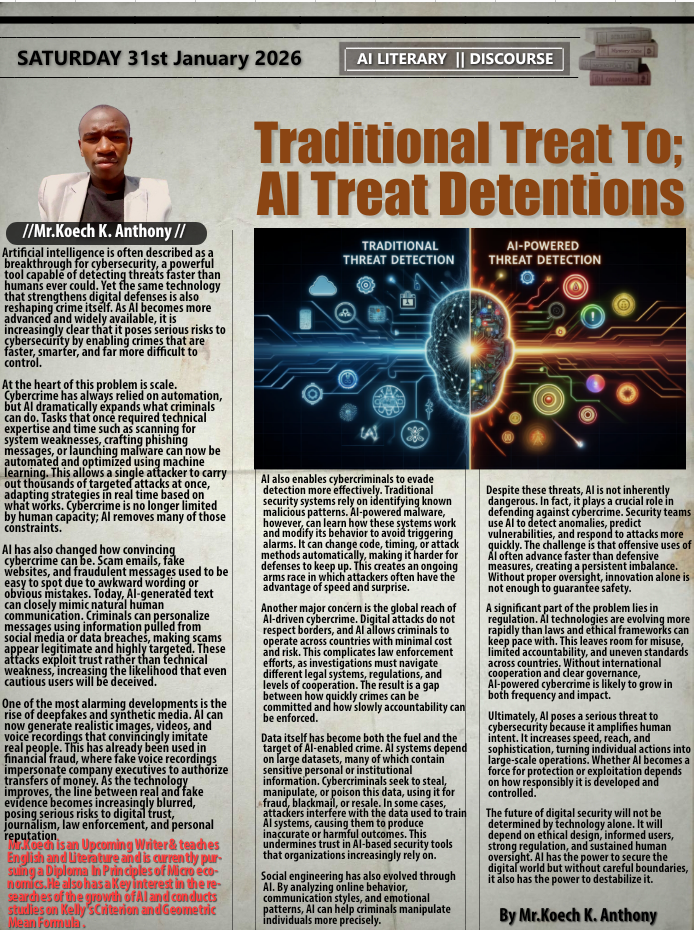
Artificial intelligence has entered this world not as a disruption to that logic, but as its ultimate accelerator. Intelligent systems excel at optimization. They work without fatigue, learn at speed, and produce results that often outperform human effort. As AI spreads across sectors, from service industries to research labs, it reinforces a long-standing belief that efficiency is the highest good. The danger lies not in the technology itself, but in the narrow definition of value it magnifies.
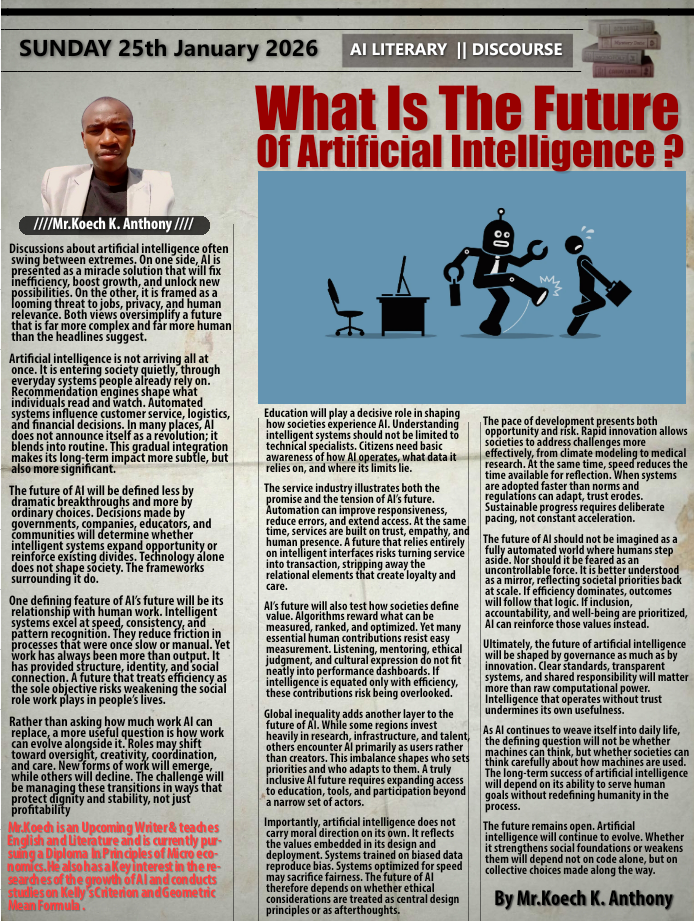
The rise of AI forces a difficult question to the surface: if machines can outperform humans in speed, accuracy, and scale, what remains distinctly human? This question is not theoretical. It affects how people view their relevance, how work is structured, and how worth is assigned. When productivity becomes the primary benchmark, human contribution is increasingly evaluated through comparison with machines rather than through human terms.
In many workplaces, AI systems now handle tasks once associated with expertise and judgment. Customer service is automated, scheduling is optimized, and decision-support tools recommend actions based on patterns drawn from vast datasets. These systems are efficient and often reliable. Yet efficiency alone does not equate to understanding. AI can recommend, predict, and optimize, but it does not carry responsibility for outcomes. That burden remains human, even as authority quietly shifts toward automated systems.
This shift exposes a deeper imbalance. Productivity measures what is visible and quantifiable. Meaning does not. Care, ethical judgment, emotional intelligence, and contextual understanding resist easy measurement. They unfold over time and depend on relationships rather than metrics. As AI becomes more capable, there is a growing risk that these human qualities are treated as secondary or inefficient simply because they cannot be optimized in the same way.
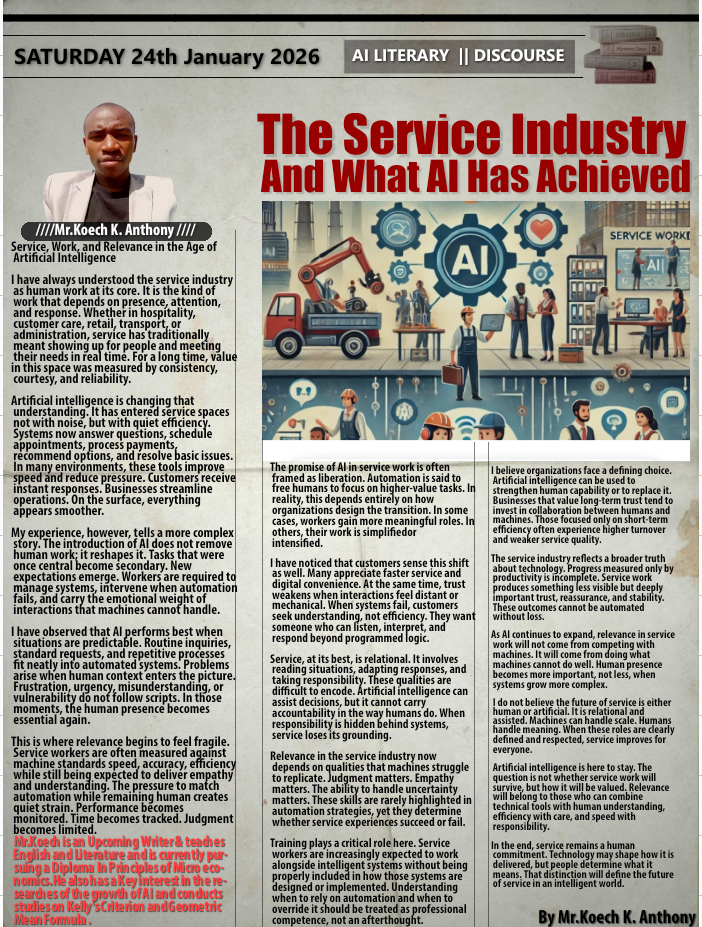
The service industry illustrates this tension clearly. Many services rely not only on accuracy but on trust, empathy, and responsiveness to nuance. AI can streamline processes, but it cannot genuinely listen, understand personal context, or navigate moral ambiguity. When service systems prioritize speed over care, the quality of human experience declines even if performance indicators improve. The result is a system that functions well but feels hollow.
Education faces a similar challenge. AI can deliver information, personalize learning paths, and assess performance with precision. However, education is not merely the transfer of knowledge. It is the formation of judgment, curiosity, and ethical awareness. When learning becomes overly optimized, students may gain skills without developing wisdom. The purpose of education risks shifting from understanding the world to simply keeping pace with it.
The pressure to remain relevant in a machine-accelerated world also carries psychological weight. Individuals are encouraged to continuously upskill, adapt, and prove usefulness. While learning is valuable, constant comparison with machines creates anxiety rather than growth. Human worth becomes conditional, tied to performance rather than presence or contribution in broader social terms.
Meaning, unlike productivity, is relational. It emerges from purpose, belonging, and the sense that one’s actions matter beyond immediate outcomes. AI does not possess this dimension. It executes objectives but does not question them. Humans remain responsible for defining goals, values, and boundaries. When this responsibility is neglected, technology fills the vacuum with whatever objectives are easiest to measure.
The future of AI should therefore not be framed solely in terms of capability. The more important question concerns direction. Technology will continue to advance. That is not in doubt. What remains uncertain is whether societies will expand their understanding of value alongside technological growth. Progress that improves output while eroding meaning is fragile. It produces systems that function efficiently but fail to sustain human well-being.
A more balanced approach recognizes AI as a tool rather than a standard of worth. Intelligent systems can enhance productivity, reduce error, and expand access. These benefits are real. Yet they must be guided by human judgment that prioritizes dignity, fairness, and long-term impact. Meaning cannot be automated. It must be protected and cultivated deliberately.
Ultimately, artificial intelligence reflects the values of those who deploy it. If efficiency remains the only measure of success, AI will deepen existing pressures and inequalities. If meaning is restored as a central concern, technology can support human flourishing rather than undermine it. The choice does not lie in the machines, but in the frameworks governing their use.
The age of AI does not demand that humans compete with machines. It asks something more difficult: that humans clarify what matters when productivity is no longer enough. In answering that question, societies determine not only the future of work, but the future of relevance itself.
Artificial intelligence has entered this world not as a disruption to that logic, but as its ultimate accelerator. Intelligent systems excel at optimization. They work without fatigue, learn at speed, and produce results that often outperform human effort. As AI spreads across sectors, from service industries to research labs, it reinforces a long-standing belief that efficiency is the highest good. The danger lies not in the technology itself, but in the narrow definition of value it magnifies.
The rise of AI forces a difficult question to the surface: if machines can outperform humans in speed, accuracy, and scale, what remains distinctly human? This question is not theoretical. It affects how people view their relevance, how work is structured, and how worth is assigned. When productivity becomes the primary benchmark, human contribution is increasingly evaluated through comparison with machines rather than through human terms.
In many workplaces, AI systems now handle tasks once associated with expertise and judgment. Customer service is automated, scheduling is optimized, and decision-support tools recommend actions based on patterns drawn from vast datasets. These systems are efficient and often reliable. Yet efficiency alone does not equate to understanding. AI can recommend, predict, and optimize, but it does not carry responsibility for outcomes. That burden remains human, even as authority quietly shifts toward automated systems.
This shift exposes a deeper imbalance. Productivity measures what is visible and quantifiable. Meaning does not. Care, ethical judgment, emotional intelligence, and contextual understanding resist easy measurement. They unfold over time and depend on relationships rather than metrics. As AI becomes more capable, there is a growing risk that these human qualities are treated as secondary or inefficient simply because they cannot be optimized in the same way.
The service industry illustrates this tension clearly. Many services rely not only on accuracy but on trust, empathy, and responsiveness to nuance. AI can streamline processes, but it cannot genuinely listen, understand personal context, or navigate moral ambiguity. When service systems prioritize speed over care, the quality of human experience declines even if performance indicators improve. The result is a system that functions well but feels hollow.
Education faces a similar challenge. AI can deliver information, personalize learning paths, and assess performance with precision. However, education is not merely the transfer of knowledge. It is the formation of judgment, curiosity, and ethical awareness. When learning becomes overly optimized, students may gain skills without developing wisdom. The purpose of education risks shifting from understanding the world to simply keeping pace with it.
The pressure to remain relevant in a machine-accelerated world also carries psychological weight. Individuals are encouraged to continuously upskill, adapt, and prove usefulness. While learning is valuable, constant comparison with machines creates anxiety rather than growth. Human worth becomes conditional, tied to performance rather than presence or contribution in broader social terms.
Meaning, unlike productivity, is relational. It emerges from purpose, belonging, and the sense that one’s actions matter beyond immediate outcomes. AI does not possess this dimension. It executes objectives but does not question them. Humans remain responsible for defining goals, values, and boundaries. When this responsibility is neglected, technology fills the vacuum with whatever objectives are easiest to measure.
The future of AI should therefore not be framed solely in terms of capability. The more important question concerns direction. Technology will continue to advance. That is not in doubt. What remains uncertain is whether societies will expand their understanding of value alongside technological growth. Progress that improves output while eroding meaning is fragile. It produces systems that function efficiently but fail to sustain human well-being.
A more balanced approach recognizes AI as a tool rather than a standard of worth. Intelligent systems can enhance productivity, reduce error, and expand access. These benefits are real. Yet they must be guided by human judgment that prioritizes dignity, fairness, and long-term impact. Meaning cannot be automated. It must be protected and cultivated deliberately.
Ultimately, artificial intelligence reflects the values of those who deploy it. If efficiency remains the only measure of success, AI will deepen existing pressures and inequalities. If meaning is restored as a central concern, technology can support human flourishing rather than undermine it. The choice does not lie in the machines, but in the frameworks governing their use.
The age of AI does not demand that humans compete with machines. It asks something more difficult: that humans clarify what matters when productivity is no longer enough. In answering that question, societies determine not only the future of work, but the future of relevance itself.