Everyone Is Talking About AI. But What Truly Defines Artificial Intelligence Today?
Artificial intelligence has moved from research laboratories into the center of public consciousness with remarkable speed. Once a specialized academic pursuit, it now influences economic policy, corporate strategy, media narratives, and everyday decision-making. Yet amid the surge of enthusiasm and alarm, the term “AI” is often used loosely, stretched to describe everything from simple automation to systems that simulate human reasoning. If the conversation is to be meaningful, we must ask a more disciplined question: what actually defines artificial intelligence in today’s technological and social landscape?
The defining feature of AI today is not simply automation. Automation has existed for decades, performing repetitive tasks according to fixed instructions. What distinguishes contemporary AI is its ability to learn from data and adapt to new inputs without being explicitly programmed for every situation. Instead of relying solely on predefined rules, modern AI systems identify patterns across vast datasets and generate predictions or decisions based on probability. This shift from rule-based programming to data-driven learning has fundamentally expanded what machines can accomplish.
Scale is another defining characteristic of today’s AI systems. Modern models are trained on enormous quantities of data, drawn from diverse digital sources. This scale allows AI to perform tasks once thought uniquely human, such as translating languages in real time, generating coherent essays, analyzing complex medical images, or recognizing subtle patterns in financial markets. These systems do not understand meaning as humans do, but they process information at a magnitude and speed that reshape industries and institutions.
Accessibility further defines the current AI era. What was once limited to academic research centers and major technology firms is now widely available through cloud platforms and consumer applications. Students use AI tools to assist with research, businesses rely on AI for analytics and customer engagement, and governments deploy AI for administrative efficiency. This democratization of access has accelerated integration across sectors, making AI less of a distant innovation and more of a daily companion.
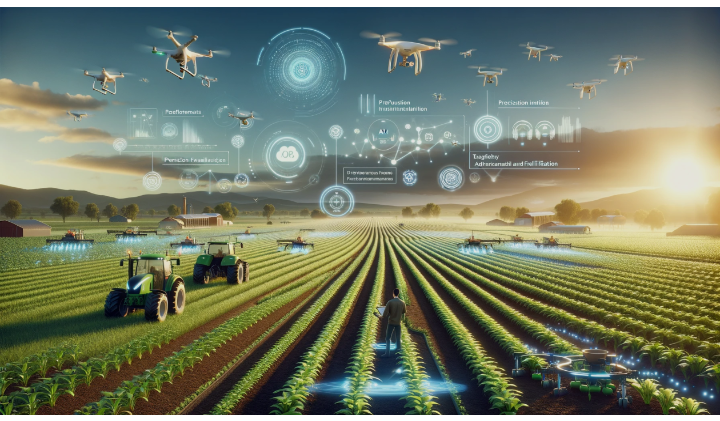
Equally important is AI’s integration into critical infrastructure. AI systems now operate within financial services, healthcare, transportation networks, logistics chains, social media platforms, and public administration. They influence what information individuals see, how risks are calculated, and how resources are distributed. In this sense, AI is no longer a standalone tool. It is becoming embedded within the structural framework of modern society.
Generative capability also marks a defining evolution. Unlike earlier systems that focused primarily on analysis and classification, modern AI can create content. It generates text, images, audio, code, and video that closely resemble human production. This ability blurs traditional boundaries between human creativity and machine output. Although AI does not possess imagination or consciousness, its capacity to simulate creative expression has altered how content is produced and consumed.
Yet what defines AI today is not solely its technical capacity. It is equally shaped by the debates surrounding it. Ethical considerations have become central to its development and deployment. Concerns about bias, fairness, misinformation, surveillance, data privacy, and labor disruption accompany every major advancement. AI is defined not only by what it can do, but by the questions it forces society to confront.
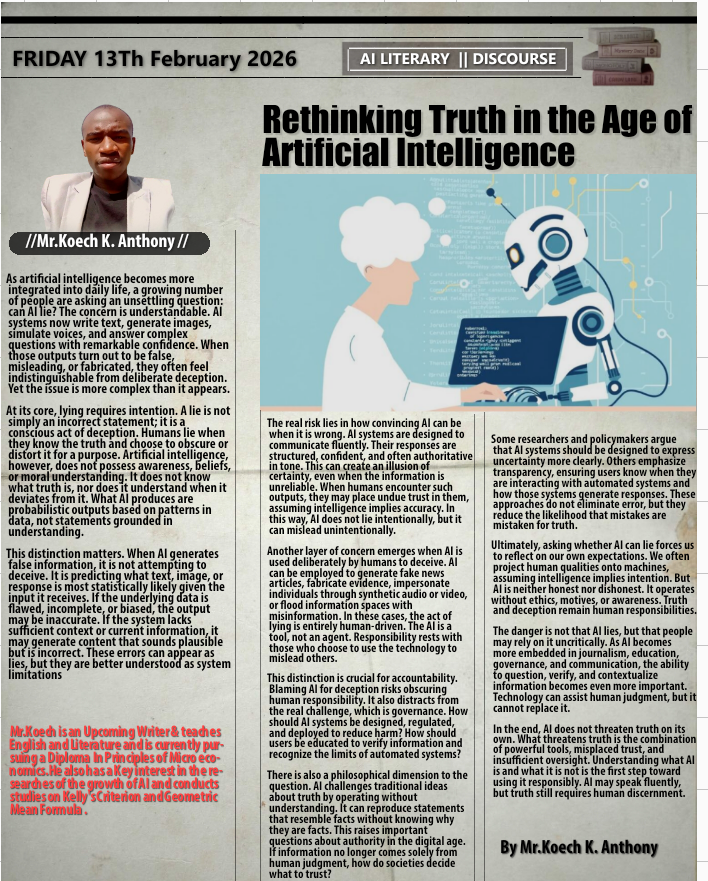
Uncertainty is another defining element. AI systems operate on probabilities, not certainties. They can generate confident responses that are occasionally incorrect. This reality challenges traditional assumptions about authority and expertise in digital environments. As AI becomes more integrated into decision-making processes, human oversight and critical evaluation become more essential, not less.
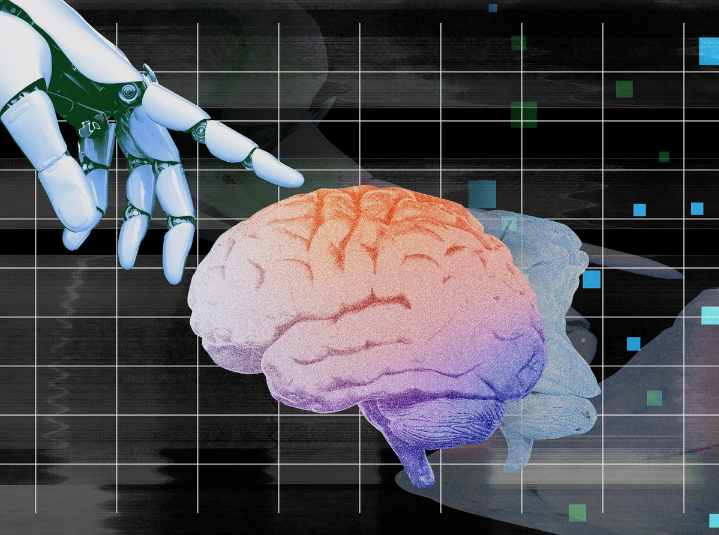
Importantly, today’s AI does not possess consciousness, intention, or moral reasoning. Despite its sophistication, it does not understand context in the human sense. It predicts outcomes based on patterns. Recognizing this limitation is essential to defining AI accurately and preventing exaggerated expectations.
Ultimately, artificial intelligence in today’s landscape is defined by adaptive learning systems operating at scale, widely accessible, deeply integrated into societal infrastructure, and capable of generating as well as analyzing content. It represents a transition from static programming to dynamic computation, from isolated systems to embedded networks.
The conversation about AI is often loud, polarized, and speculative. But clarity requires precision. AI is neither a sentient entity nor a simple tool. It is a powerful computational system shaped by data, guided by human design, and governed by human choices. What truly defines artificial intelligence today is not only its technical architecture, but the extent to which it has become intertwined with the structures and values of modern society.
Artificial intelligence has moved from research laboratories into the center of public consciousness with remarkable speed. Once a specialized academic pursuit, it now influences economic policy, corporate strategy, media narratives, and everyday decision-making. Yet amid the surge of enthusiasm and alarm, the term “AI” is often used loosely, stretched to describe everything from simple automation to systems that simulate human reasoning. If the conversation is to be meaningful, we must ask a more disciplined question: what actually defines artificial intelligence in today’s technological and social landscape?
The defining feature of AI today is not simply automation. Automation has existed for decades, performing repetitive tasks according to fixed instructions. What distinguishes contemporary AI is its ability to learn from data and adapt to new inputs without being explicitly programmed for every situation. Instead of relying solely on predefined rules, modern AI systems identify patterns across vast datasets and generate predictions or decisions based on probability. This shift from rule-based programming to data-driven learning has fundamentally expanded what machines can accomplish.
Scale is another defining characteristic of today’s AI systems. Modern models are trained on enormous quantities of data, drawn from diverse digital sources. This scale allows AI to perform tasks once thought uniquely human, such as translating languages in real time, generating coherent essays, analyzing complex medical images, or recognizing subtle patterns in financial markets. These systems do not understand meaning as humans do, but they process information at a magnitude and speed that reshape industries and institutions.
Accessibility further defines the current AI era. What was once limited to academic research centers and major technology firms is now widely available through cloud platforms and consumer applications. Students use AI tools to assist with research, businesses rely on AI for analytics and customer engagement, and governments deploy AI for administrative efficiency. This democratization of access has accelerated integration across sectors, making AI less of a distant innovation and more of a daily companion.
Equally important is AI’s integration into critical infrastructure. AI systems now operate within financial services, healthcare, transportation networks, logistics chains, social media platforms, and public administration. They influence what information individuals see, how risks are calculated, and how resources are distributed. In this sense, AI is no longer a standalone tool. It is becoming embedded within the structural framework of modern society.
Generative capability also marks a defining evolution. Unlike earlier systems that focused primarily on analysis and classification, modern AI can create content. It generates text, images, audio, code, and video that closely resemble human production. This ability blurs traditional boundaries between human creativity and machine output. Although AI does not possess imagination or consciousness, its capacity to simulate creative expression has altered how content is produced and consumed.
Yet what defines AI today is not solely its technical capacity. It is equally shaped by the debates surrounding it. Ethical considerations have become central to its development and deployment. Concerns about bias, fairness, misinformation, surveillance, data privacy, and labor disruption accompany every major advancement. AI is defined not only by what it can do, but by the questions it forces society to confront.
Uncertainty is another defining element. AI systems operate on probabilities, not certainties. They can generate confident responses that are occasionally incorrect. This reality challenges traditional assumptions about authority and expertise in digital environments. As AI becomes more integrated into decision-making processes, human oversight and critical evaluation become more essential, not less.
Importantly, today’s AI does not possess consciousness, intention, or moral reasoning. Despite its sophistication, it does not understand context in the human sense. It predicts outcomes based on patterns. Recognizing this limitation is essential to defining AI accurately and preventing exaggerated expectations.
Ultimately, artificial intelligence in today’s landscape is defined by adaptive learning systems operating at scale, widely accessible, deeply integrated into societal infrastructure, and capable of generating as well as analyzing content. It represents a transition from static programming to dynamic computation, from isolated systems to embedded networks.
The conversation about AI is often loud, polarized, and speculative. But clarity requires precision. AI is neither a sentient entity nor a simple tool. It is a powerful computational system shaped by data, guided by human design, and governed by human choices. What truly defines artificial intelligence today is not only its technical architecture, but the extent to which it has become intertwined with the structures and values of modern society.