From Shifting Cultivation to Intelligent Cultivation: How AI Is Redefining Agriculture
For centuries, shifting cultivation represented a survival strategy. Communities cleared small plots of land, farmed them for a few seasons, then moved on once soil fertility declined. It was adaptive, responsive to environmental limits, and rooted in deep ecological knowledge. Yet as populations expanded and environmental pressures intensified, traditional systems faced strain. Today, agriculture stands at another turning point. Instead of shifting land to maintain productivity, we are shifting intelligence into the field itself. Artificial intelligence is redefining what cultivation means.
The core challenge of agriculture has always been uncertainty. Weather patterns fluctuate, soil conditions vary, pests spread unpredictably, and market prices change rapidly. Traditional farming relied on experience, intuition, and observation. While these remain invaluable, AI introduces a new layer of precision. By analyzing vast datasets from satellites, sensors, climate models, and historical yield records, AI systems can predict crop performance, detect soil deficiencies, and anticipate disease outbreaks before visible damage occurs.
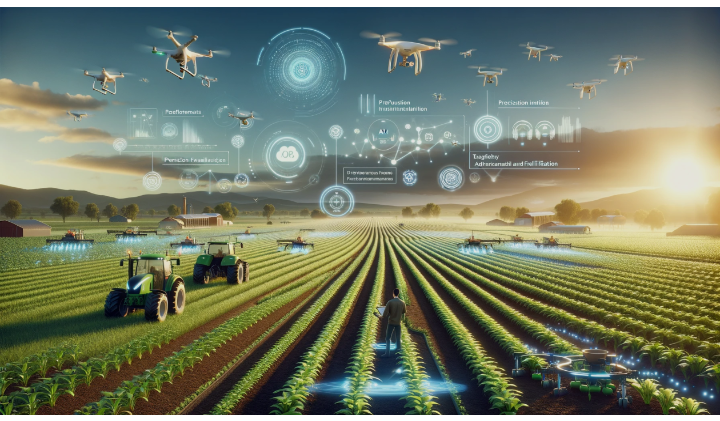
Precision agriculture is one of AI’s most significant contributions. Instead of treating entire fields uniformly, AI-driven systems enable farmers to apply water, fertilizers, and pesticides only where needed. Sensors embedded in soil measure moisture levels in real time. Drones equipped with computer vision identify crop stress. Machine learning models recommend optimal planting schedules based on climate forecasts. This targeted approach reduces waste, lowers costs, and minimizes environmental impact.
In regions where shifting cultivation once served as a necessity due to soil degradation, AI offers tools to improve sustainability without relocating farmland. Data analytics can monitor soil health continuously, advising on crop rotation, nutrient replenishment, and erosion prevention. Rather than abandoning exhausted land, farmers can restore and manage it more effectively. AI shifts the strategy from moving away from the problem to managing it intelligently.
Climate change adds urgency to this transformation. Erratic rainfall, rising temperatures, and extreme weather events threaten food security worldwide. AI-powered climate modeling helps farmers anticipate changes and adjust accordingly. Early warning systems can predict droughts or floods, enabling proactive planning. In developing regions especially, these tools can make the difference between resilience and vulnerability.
AI also strengthens agricultural supply chains. From forecasting demand to optimizing transportation routes, intelligent systems reduce post-harvest losses and improve market access. Farmers can receive data-driven insights into pricing trends and distribution opportunities. This integration of AI across the agricultural value chain enhances not only productivity but also economic stability.
However, the transition from traditional cultivation methods to AI-enabled agriculture raises important considerations. Access to technology remains uneven. Smallholder farmers may lack the infrastructure, connectivity, or financial resources required to adopt advanced systems. Without inclusive policies and investment, AI risks widening disparities between technologically equipped farms and those operating without digital support.
There is also a knowledge shift underway. Farming has long been grounded in generational expertise passed through communities. AI introduces computational insights that complement, but should not replace, local knowledge. The most effective agricultural future will likely blend traditional ecological understanding with technological precision. Human judgment remains central to interpreting and applying data responsibly.
Environmental sustainability is another critical dimension. While AI can reduce resource waste and promote efficient practices, its infrastructure requires energy and digital networks. Policymakers and developers must ensure that technological expansion aligns with environmental goals rather than undermining them.
The movement from shifting cultivation to intelligent cultivation represents more than a technological upgrade. It symbolizes a broader evolution in how societies approach resource management. Instead of expanding into new land when productivity declines, AI encourages optimization, restoration, and informed decision-making within existing systems.
Agriculture has always adapted to survive. From manual tools to mechanization, from irrigation systems to biotechnology, each era has introduced innovations that reshaped cultivation practices. AI is the next chapter in that progression. It does not eliminate the farmer’s role. Rather, it equips farmers with predictive insights and analytical tools that enhance resilience and efficiency.
As global populations grow and environmental constraints intensify, food systems must become smarter, not merely larger. The shift is no longer about relocating cultivation to new terrain. It is about embedding intelligence within the soil, the seeds, and the systems that sustain them.
Artificial intelligence is not replacing agriculture’s foundations. It is redefining how they are managed. The future of farming may depend less on the movement of land and more on the movement of data.
For centuries, shifting cultivation represented a survival strategy. Communities cleared small plots of land, farmed them for a few seasons, then moved on once soil fertility declined. It was adaptive, responsive to environmental limits, and rooted in deep ecological knowledge. Yet as populations expanded and environmental pressures intensified, traditional systems faced strain. Today, agriculture stands at another turning point. Instead of shifting land to maintain productivity, we are shifting intelligence into the field itself. Artificial intelligence is redefining what cultivation means.
The core challenge of agriculture has always been uncertainty. Weather patterns fluctuate, soil conditions vary, pests spread unpredictably, and market prices change rapidly. Traditional farming relied on experience, intuition, and observation. While these remain invaluable, AI introduces a new layer of precision. By analyzing vast datasets from satellites, sensors, climate models, and historical yield records, AI systems can predict crop performance, detect soil deficiencies, and anticipate disease outbreaks before visible damage occurs.
Precision agriculture is one of AI’s most significant contributions. Instead of treating entire fields uniformly, AI-driven systems enable farmers to apply water, fertilizers, and pesticides only where needed. Sensors embedded in soil measure moisture levels in real time. Drones equipped with computer vision identify crop stress. Machine learning models recommend optimal planting schedules based on climate forecasts. This targeted approach reduces waste, lowers costs, and minimizes environmental impact.
In regions where shifting cultivation once served as a necessity due to soil degradation, AI offers tools to improve sustainability without relocating farmland. Data analytics can monitor soil health continuously, advising on crop rotation, nutrient replenishment, and erosion prevention. Rather than abandoning exhausted land, farmers can restore and manage it more effectively. AI shifts the strategy from moving away from the problem to managing it intelligently.
Climate change adds urgency to this transformation. Erratic rainfall, rising temperatures, and extreme weather events threaten food security worldwide. AI-powered climate modeling helps farmers anticipate changes and adjust accordingly. Early warning systems can predict droughts or floods, enabling proactive planning. In developing regions especially, these tools can make the difference between resilience and vulnerability.
AI also strengthens agricultural supply chains. From forecasting demand to optimizing transportation routes, intelligent systems reduce post-harvest losses and improve market access. Farmers can receive data-driven insights into pricing trends and distribution opportunities. This integration of AI across the agricultural value chain enhances not only productivity but also economic stability.
However, the transition from traditional cultivation methods to AI-enabled agriculture raises important considerations. Access to technology remains uneven. Smallholder farmers may lack the infrastructure, connectivity, or financial resources required to adopt advanced systems. Without inclusive policies and investment, AI risks widening disparities between technologically equipped farms and those operating without digital support.
There is also a knowledge shift underway. Farming has long been grounded in generational expertise passed through communities. AI introduces computational insights that complement, but should not replace, local knowledge. The most effective agricultural future will likely blend traditional ecological understanding with technological precision. Human judgment remains central to interpreting and applying data responsibly.
Environmental sustainability is another critical dimension. While AI can reduce resource waste and promote efficient practices, its infrastructure requires energy and digital networks. Policymakers and developers must ensure that technological expansion aligns with environmental goals rather than undermining them.
The movement from shifting cultivation to intelligent cultivation represents more than a technological upgrade. It symbolizes a broader evolution in how societies approach resource management. Instead of expanding into new land when productivity declines, AI encourages optimization, restoration, and informed decision-making within existing systems.
Agriculture has always adapted to survive. From manual tools to mechanization, from irrigation systems to biotechnology, each era has introduced innovations that reshaped cultivation practices. AI is the next chapter in that progression. It does not eliminate the farmer’s role. Rather, it equips farmers with predictive insights and analytical tools that enhance resilience and efficiency.
As global populations grow and environmental constraints intensify, food systems must become smarter, not merely larger. The shift is no longer about relocating cultivation to new terrain. It is about embedding intelligence within the soil, the seeds, and the systems that sustain them.
Artificial intelligence is not replacing agriculture’s foundations. It is redefining how they are managed. The future of farming may depend less on the movement of land and more on the movement of data.