Schools have just reopened across the country, and like many Kenyans, I have been watching the familiar return of uniforms, timetables, and expectations. For learners in transition classes such as Grade 7 and Grade 10, this moment carries both hope and pressure. But beyond examinations and curriculum structures, I believe we are facing a deeper and more urgent question: are we educating our children and communities for the world they are stepping into, or for one that is already fading?
From where I stand, advanced technology is no longer an optional addition to education, it has become a basic requirement. Artificial intelligence, automation, and digital systems are already reshaping how work is done, how decisions are made, and how value is created. An education system that treats technology as peripheral risks producing learners who are academically qualified, yet practically unprepared.
This challenge extends beyond formal schooling. In Kenya, informal education sustains millions of people since skills are passed down through apprenticeships, on-the-job learning, and community-based training. I have seen how these pathways keep families afloat, yet I have also seen how vulnerable they become when industries modernize faster than people can adapt. When technology advances without being integrated into learning, informal workers are often the first to be left behind.
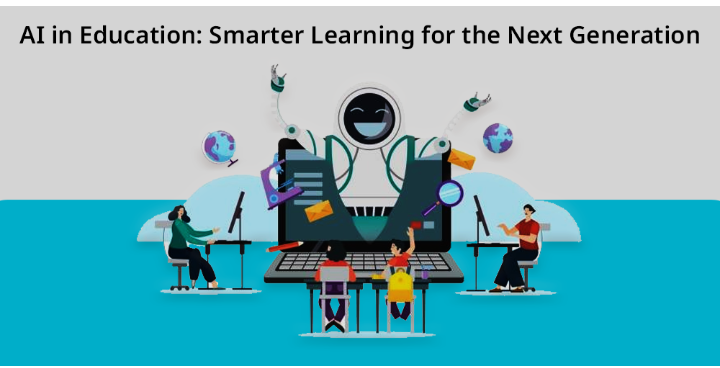
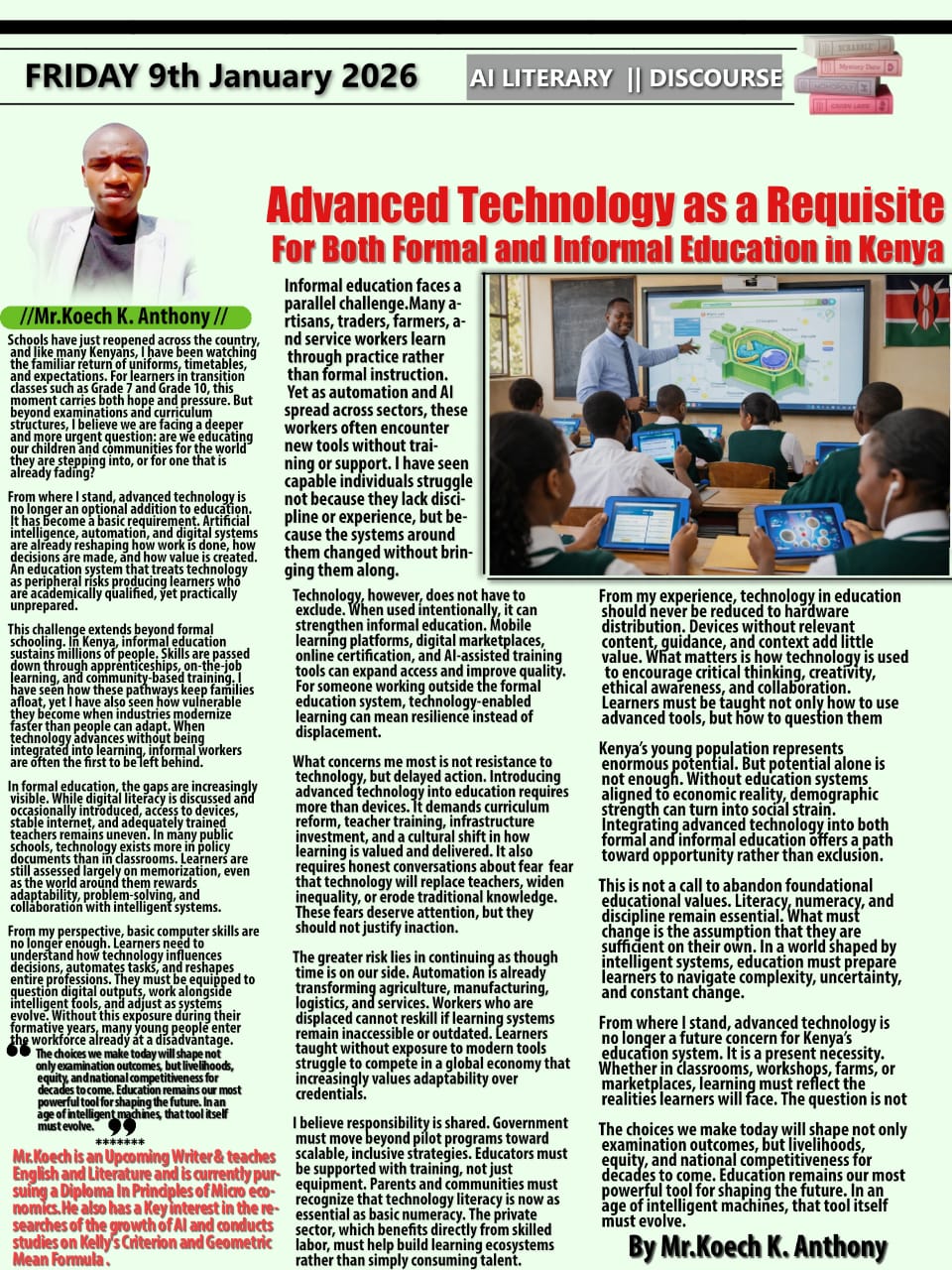
In formal education, the gaps are increasingly visible. While digital literacy is discussed and occasionally introduced, access to devices, stable internet, and adequately trained teachers remains uneven. In many public schools, technology exists more in policy documents than in classrooms. Learners are still assessed largely on memorization, even as the world around them rewards adaptability, problem-solving, and collaboration with intelligent systems.
From my perspective, basic computer skills are no longer enough. Learners need to understand how technology influences decisions, automates tasks, and reshapes entire professions. They must be equipped to question digital outputs, work alongside intelligent tools, and adjust as systems evolve. Without this exposure during their formative years, many young people enter the workforce already at a disadvantage.
Informal education faces a parallel challenhe as many artisans, traders, farmers, and service workers learn through practice rather than formal instruction. Yet as automation and AI spread across sectors, these workers often encounter new tools without training or support. I have seen capable individuals struggle not because they lack discipline or experience, but because the systems around them changed without bringing them along.
Technology, however, does not have to exclude this that when used intentionally, it can strengthen informal education. Mobile learning platforms, digital marketplaces, online certification, and AI-assisted training tools can expand access and improve quality. For someone working outside the formal education system, technology-enabled learning can mean resilience instead of displacement.
What concerns me most is not resistance to technology, but delayed action since introducing advanced technology into education requires more than devices. It demands not only curriculum reform but also teachers training, infrastructure investment, and a cultural shift in how learning is valued and delivered. It also requires honest conversations about fear — fear that technology will replace teachers, widen inequality, or erode traditional knowledge. These fears deserve attention, but they should not justify inaction.
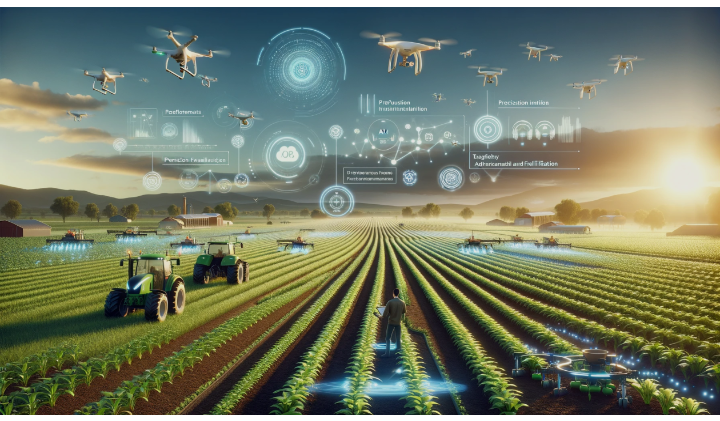
The greater risk lies in continuing as though time is on our side. Automation is already transforming agriculture, manufacturing, logistics, and services. Workers who are displaced cannot reskill if learning systems remain inaccessible or outdated. Learners taught without exposure to modern tools struggle to compete in a global economy that increasingly values adaptability over credentials.
I believe responsibility is shared and government must move beyond pilot programs toward scalable, inclusive strategies. Educators must be supported with training and not just equipments. Parents and communities must also recognize that technology literacy is now as essential as basic numeracy. The private sector, which benefits directly from skilled labor, must help build learning ecosystems rather than simply consuming talent.
From my experience, technology in education should never be reduced to hardware distribution. Devices without relevant content, guidance, and context add little value. What matters is how technology is used — to encourage critical thinking, creativity, ethical awareness, and collaboration. Learners must be taught not only how to use advanced tools, but how to question them.
Kenya’s young population represents enormous potential yet potential alone is not enough. Without education systems aligned to economic reality, demographic strength can turn into social strain. Integrating advanced technology into both formal and informal education offers a path toward opportunity rather than exclusion.
This is not a call to abandon foundational educational values. Literacy, numeracy, and discipline remain essential. What must change is the assumption that they are sufficient on their own. In a world shaped by intelligent systems, education must prepare learners to navigate complexity, uncertainty, and constant change.
From where I stand, advanced technology is no longer a future concern for Kenya’s education system but a present necessity. Whether in classrooms, workshops, farms, or marketplaces, learning must reflect the realities learners will face. The question is not whether we can afford to integrate advanced technology into education, but the opposite.
The choices we make today will shape not only examination outcomes, but livelihoods, equity, and national competitiveness for decades to come. Education remains our most powerful tool for shaping the future. In an age of intelligent machines, that tool itself must evolve.
From where I stand, advanced technology is no longer an optional addition to education, it has become a basic requirement. Artificial intelligence, automation, and digital systems are already reshaping how work is done, how decisions are made, and how value is created. An education system that treats technology as peripheral risks producing learners who are academically qualified, yet practically unprepared.
This challenge extends beyond formal schooling. In Kenya, informal education sustains millions of people since skills are passed down through apprenticeships, on-the-job learning, and community-based training. I have seen how these pathways keep families afloat, yet I have also seen how vulnerable they become when industries modernize faster than people can adapt. When technology advances without being integrated into learning, informal workers are often the first to be left behind.
In formal education, the gaps are increasingly visible. While digital literacy is discussed and occasionally introduced, access to devices, stable internet, and adequately trained teachers remains uneven. In many public schools, technology exists more in policy documents than in classrooms. Learners are still assessed largely on memorization, even as the world around them rewards adaptability, problem-solving, and collaboration with intelligent systems.
From my perspective, basic computer skills are no longer enough. Learners need to understand how technology influences decisions, automates tasks, and reshapes entire professions. They must be equipped to question digital outputs, work alongside intelligent tools, and adjust as systems evolve. Without this exposure during their formative years, many young people enter the workforce already at a disadvantage.
Informal education faces a parallel challenhe as many artisans, traders, farmers, and service workers learn through practice rather than formal instruction. Yet as automation and AI spread across sectors, these workers often encounter new tools without training or support. I have seen capable individuals struggle not because they lack discipline or experience, but because the systems around them changed without bringing them along.
Technology, however, does not have to exclude this that when used intentionally, it can strengthen informal education. Mobile learning platforms, digital marketplaces, online certification, and AI-assisted training tools can expand access and improve quality. For someone working outside the formal education system, technology-enabled learning can mean resilience instead of displacement.
What concerns me most is not resistance to technology, but delayed action since introducing advanced technology into education requires more than devices. It demands not only curriculum reform but also teachers training, infrastructure investment, and a cultural shift in how learning is valued and delivered. It also requires honest conversations about fear — fear that technology will replace teachers, widen inequality, or erode traditional knowledge. These fears deserve attention, but they should not justify inaction.
The greater risk lies in continuing as though time is on our side. Automation is already transforming agriculture, manufacturing, logistics, and services. Workers who are displaced cannot reskill if learning systems remain inaccessible or outdated. Learners taught without exposure to modern tools struggle to compete in a global economy that increasingly values adaptability over credentials.
I believe responsibility is shared and government must move beyond pilot programs toward scalable, inclusive strategies. Educators must be supported with training and not just equipments. Parents and communities must also recognize that technology literacy is now as essential as basic numeracy. The private sector, which benefits directly from skilled labor, must help build learning ecosystems rather than simply consuming talent.
From my experience, technology in education should never be reduced to hardware distribution. Devices without relevant content, guidance, and context add little value. What matters is how technology is used — to encourage critical thinking, creativity, ethical awareness, and collaboration. Learners must be taught not only how to use advanced tools, but how to question them.
Kenya’s young population represents enormous potential yet potential alone is not enough. Without education systems aligned to economic reality, demographic strength can turn into social strain. Integrating advanced technology into both formal and informal education offers a path toward opportunity rather than exclusion.
This is not a call to abandon foundational educational values. Literacy, numeracy, and discipline remain essential. What must change is the assumption that they are sufficient on their own. In a world shaped by intelligent systems, education must prepare learners to navigate complexity, uncertainty, and constant change.
From where I stand, advanced technology is no longer a future concern for Kenya’s education system but a present necessity. Whether in classrooms, workshops, farms, or marketplaces, learning must reflect the realities learners will face. The question is not whether we can afford to integrate advanced technology into education, but the opposite.
The choices we make today will shape not only examination outcomes, but livelihoods, equity, and national competitiveness for decades to come. Education remains our most powerful tool for shaping the future. In an age of intelligent machines, that tool itself must evolve.