You Have No Right to Be Bored in the Age of AI
There was a time when boredom was understandable. It came from limitation. Information was not always within reach, opportunities were shaped by geography, and learning often required access that many people simply did not have. Curiosity had to wait, and exploration had boundaries. In that world, boredom was not always a choice. It was sometimes a condition imposed by circumstance.
That world no longer exists. Artificial intelligence has quietly dismantled many of those barriers, reshaping access in ways that would have once seemed impossible. Knowledge is no longer distant or delayed. It is immediate, responsive, and increasingly tailored to individual needs. At any moment, you can ask a question, explore a field, develop a skill, or test an idea. The distance between curiosity and understanding has narrowed to almost nothing.
And yet, despite this transformation, boredom persists. That is the paradox of the AI age. The tools are more powerful than ever, the possibilities broader than ever, and still, people feel disengaged. But this form of boredom is different from the past. It is no longer rooted in scarcity. It exists in the presence of abundance. It is not about having nothing to do, but about not choosing to do something meaningful with what is available.
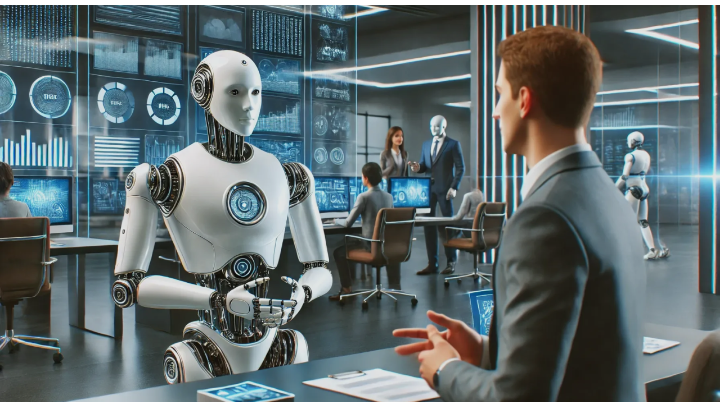
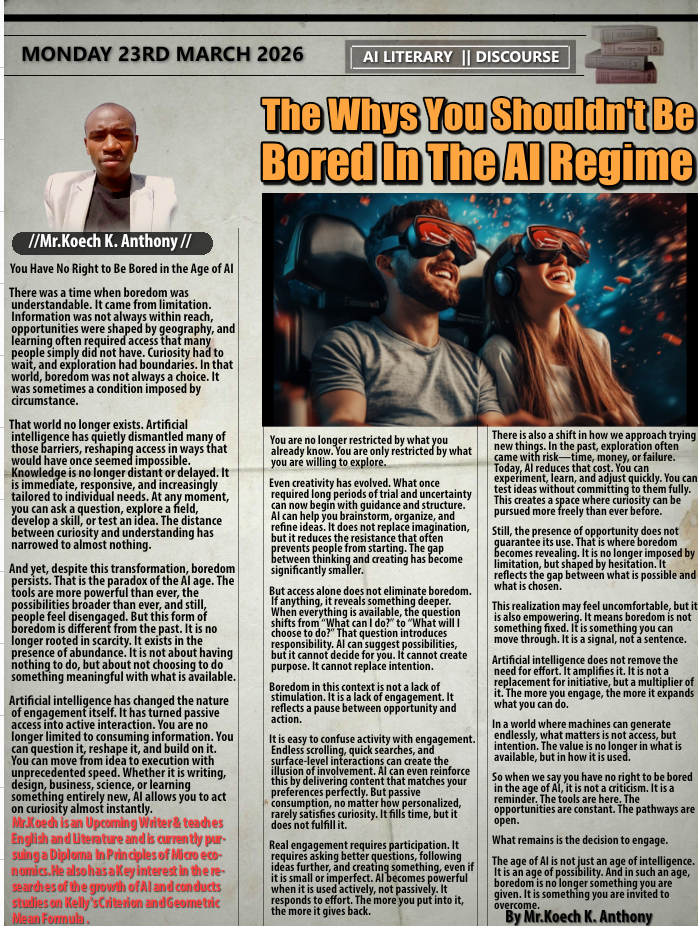
Artificial intelligence has changed the nature of engagement itself. It has turned passive access into active interaction. You are no longer limited to consuming information. You can question it, reshape it, and build on it. You can move from idea to execution with unprecedented speed. Whether it is writing, design, business, science, or learning something entirely new, AI allows you to act on curiosity almost instantly.
You are no longer restricted by what you already know. You are only restricted by what you are willing to explore.
Even creativity has evolved. What once required long periods of trial and uncertainty can now begin with guidance and structure. AI can help you brainstorm, organize, and refine ideas. It does not replace imagination, but it reduces the resistance that often prevents people from starting. The gap between thinking and creating has become significantly smaller.
But access alone does not eliminate boredom. If anything, it reveals something deeper. When everything is available, the question shifts from “What can I do?” to “What will I choose to do?” That question introduces responsibility. AI can suggest possibilities, but it cannot decide for you. It cannot create purpose. It cannot replace intention.
Boredom in this context is not a lack of stimulation. It is a lack of engagement. It reflects a pause between opportunity and action.
It is easy to confuse activity with engagement. Endless scrolling, quick searches, and surface-level interactions can create the illusion of involvement. AI can even reinforce this by delivering content that matches your preferences perfectly. But passive consumption, no matter how personalized, rarely satisfies curiosity. It fills time, but it does not fulfill it.
Real engagement requires participation. It requires asking better questions, following ideas further, and creating something, even if it is small or imperfect. AI becomes powerful when it is used actively, not passively. It responds to effort. The more you put into it, the more it gives back.
There is also a shift in how we approach trying new things. In the past, exploration often came with risk—time, money, or failure. Today, AI reduces that cost. You can experiment, learn, and adjust quickly. You can test ideas without committing to them fully. This creates a space where curiosity can be pursued more freely than ever before.
Still, the presence of opportunity does not guarantee its use. That is where boredom becomes revealing. It is no longer imposed by limitation, but shaped by hesitation. It reflects the gap between what is possible and what is chosen.
This realization may feel uncomfortable, but it is also empowering. It means boredom is not something fixed. It is something you can move through. It is a signal, not a sentence.
Artificial intelligence does not remove the need for effort. It amplifies it. It is not a replacement for initiative, but a multiplier of it. The more you engage, the more it expands what you can do.
In a world where machines can generate endlessly, what matters is not access, but intention. The value is no longer in what is available, but in how it is used.
So when we say you have no right to be bored in the age of AI, it is not a criticism. It is a reminder. The tools are here. The opportunities are constant. The pathways are open.
What remains is the decision to engage.
The age of AI is not just an age of intelligence. It is an age of possibility. And in such an age, boredom is no longer something you are given. It is something you are invited to overcome.
There was a time when boredom was understandable. It came from limitation. Information was not always within reach, opportunities were shaped by geography, and learning often required access that many people simply did not have. Curiosity had to wait, and exploration had boundaries. In that world, boredom was not always a choice. It was sometimes a condition imposed by circumstance.
That world no longer exists. Artificial intelligence has quietly dismantled many of those barriers, reshaping access in ways that would have once seemed impossible. Knowledge is no longer distant or delayed. It is immediate, responsive, and increasingly tailored to individual needs. At any moment, you can ask a question, explore a field, develop a skill, or test an idea. The distance between curiosity and understanding has narrowed to almost nothing.
And yet, despite this transformation, boredom persists. That is the paradox of the AI age. The tools are more powerful than ever, the possibilities broader than ever, and still, people feel disengaged. But this form of boredom is different from the past. It is no longer rooted in scarcity. It exists in the presence of abundance. It is not about having nothing to do, but about not choosing to do something meaningful with what is available.
Artificial intelligence has changed the nature of engagement itself. It has turned passive access into active interaction. You are no longer limited to consuming information. You can question it, reshape it, and build on it. You can move from idea to execution with unprecedented speed. Whether it is writing, design, business, science, or learning something entirely new, AI allows you to act on curiosity almost instantly.
You are no longer restricted by what you already know. You are only restricted by what you are willing to explore.
Even creativity has evolved. What once required long periods of trial and uncertainty can now begin with guidance and structure. AI can help you brainstorm, organize, and refine ideas. It does not replace imagination, but it reduces the resistance that often prevents people from starting. The gap between thinking and creating has become significantly smaller.
But access alone does not eliminate boredom. If anything, it reveals something deeper. When everything is available, the question shifts from “What can I do?” to “What will I choose to do?” That question introduces responsibility. AI can suggest possibilities, but it cannot decide for you. It cannot create purpose. It cannot replace intention.
Boredom in this context is not a lack of stimulation. It is a lack of engagement. It reflects a pause between opportunity and action.
It is easy to confuse activity with engagement. Endless scrolling, quick searches, and surface-level interactions can create the illusion of involvement. AI can even reinforce this by delivering content that matches your preferences perfectly. But passive consumption, no matter how personalized, rarely satisfies curiosity. It fills time, but it does not fulfill it.
Real engagement requires participation. It requires asking better questions, following ideas further, and creating something, even if it is small or imperfect. AI becomes powerful when it is used actively, not passively. It responds to effort. The more you put into it, the more it gives back.
There is also a shift in how we approach trying new things. In the past, exploration often came with risk—time, money, or failure. Today, AI reduces that cost. You can experiment, learn, and adjust quickly. You can test ideas without committing to them fully. This creates a space where curiosity can be pursued more freely than ever before.
Still, the presence of opportunity does not guarantee its use. That is where boredom becomes revealing. It is no longer imposed by limitation, but shaped by hesitation. It reflects the gap between what is possible and what is chosen.
This realization may feel uncomfortable, but it is also empowering. It means boredom is not something fixed. It is something you can move through. It is a signal, not a sentence.
Artificial intelligence does not remove the need for effort. It amplifies it. It is not a replacement for initiative, but a multiplier of it. The more you engage, the more it expands what you can do.
In a world where machines can generate endlessly, what matters is not access, but intention. The value is no longer in what is available, but in how it is used.
So when we say you have no right to be bored in the age of AI, it is not a criticism. It is a reminder. The tools are here. The opportunities are constant. The pathways are open.
What remains is the decision to engage.
The age of AI is not just an age of intelligence. It is an age of possibility. And in such an age, boredom is no longer something you are given. It is something you are invited to overcome.